
RO Plant : A Complete Guide
Reverse Osmosis (RO) Plant is an advanced water purification system that uses a semi-permeable membrane to remove dissolved salts, TDS, minerals, and other unwanted contaminants from water. It produces high-quality purified water suitable for industrial, commercial, and various other applications.
Home / Blogs / RO Plant : A Complete Guide
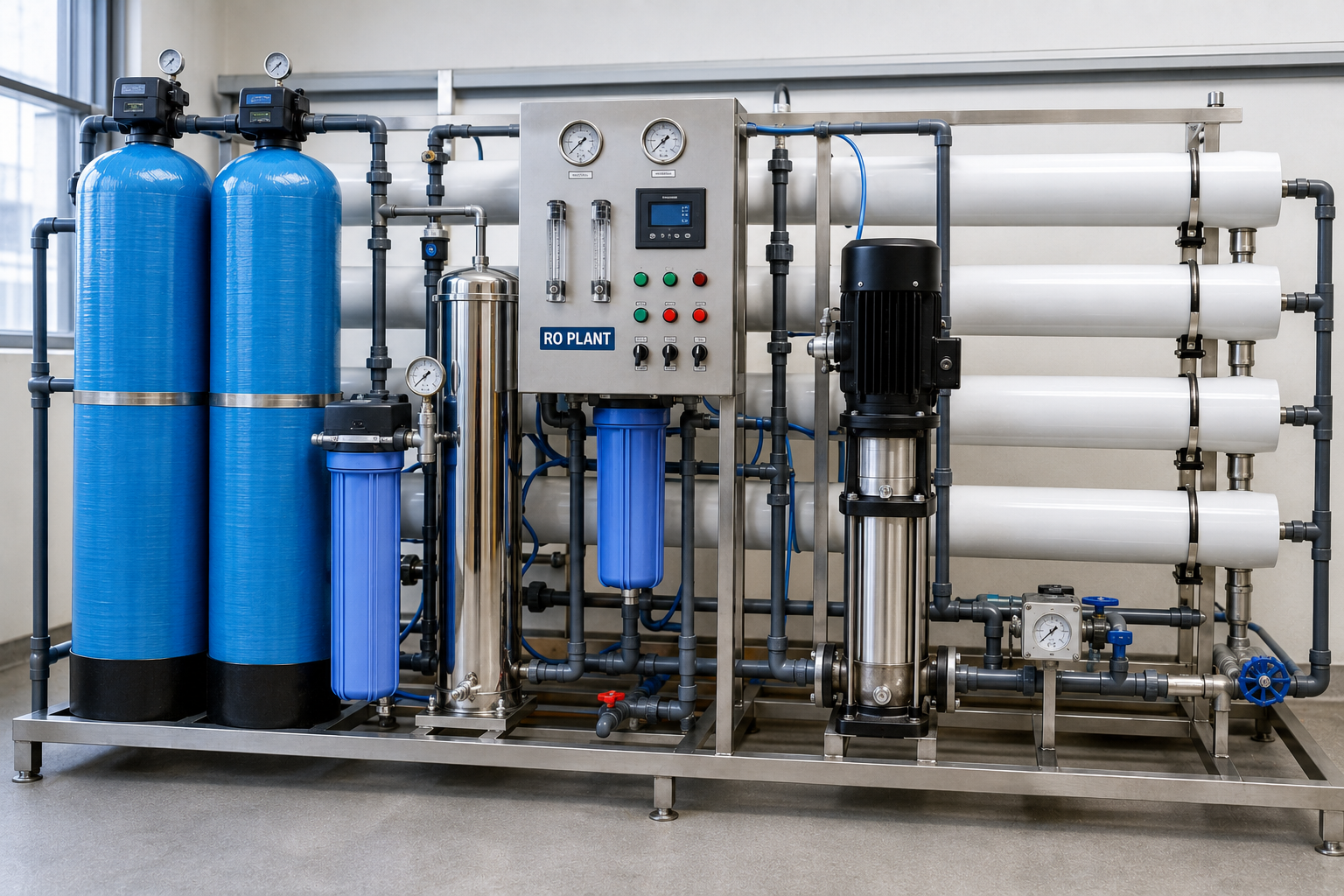
Reverse Osmosis (RO) Plant is an advanced water purification system that uses a semi-permeable membrane to remove dissolved salts, TDS, minerals, and other unwanted contaminants from water. RO technology is widely used where high-quality purified water is required for industrial, commercial, and specialized applications.
An RO plant works by applying high pressure to feed water, forcing it through the RO membrane. The membrane allows water molecules to pass through while rejecting many dissolved impurities. The purified water is known as permeate, while the concentrated stream containing rejected contaminants is called reject or concentrate.
Regular membrane cleaning, pre-treatment maintenance, filter replacement, pressure monitoring, water-quality testing, and preventive servicing are important for maintaining RO performance and extending membrane life.
Modern RO systems can also be integrated with UF, MBR, ETP, STP, water recycling, and ZLD systems to create complete and sustainable water treatment solutions.
- What is an RO Plant?
- Why is an RO Plant Important?
- How Does an RO Plant Work?
- RO Plant Treatment Process
- Modern RO Plant Technologies
- Benefits and Applications of RO Plants
- FAQs About RO Plants
Quick Fact
Modern RO plants deliver high-quality purified water, reduce TDS and dissolved contaminants, support water reuse, and help industries conserve freshwater through efficient water recovery.
1. What is an RO Plant?
RO (Reverse Osmosis) Plant is a water purification system that uses a semi-permeable membrane to remove dissolved salts, TDS, minerals, and other unwanted contaminants from water. It produces high-quality purified water suitable for industrial, commercial, and other specialized applications.
An RO plant works by applying pressure to feed water, forcing it through the RO membrane. The membrane allows water molecules to pass through while rejecting many dissolved impurities. The purified water is called permeate, while the concentrated water containing rejected contaminants is called reject or concentrate.
RO plants are commonly integrated with pre-treatment, filtration, and post-treatment systems to improve water quality, protect the membranes, and ensure reliable long-term performance. They are widely used in pharmaceutical, food and beverage, textile, chemical, manufacturing, healthcare, hospitality, and industrial applications.
2. Why is an RO Plant Important?
An RO (Reverse Osmosis) Plant is important because it provides an effective method for producing high-quality purified water by reducing dissolved salts, TDS, minerals, and other unwanted contaminants.
RO systems are particularly valuable for industries that require consistent water quality for manufacturing processes, boilers, cooling systems, pharmaceutical production, food processing, and other applications. By producing purified water, RO helps protect equipment from scaling and contamination and supports reliable process performance.
RO plants also contribute to water conservation and sustainable water management by enabling treated water to be reused and reducing dependence on freshwater sources. When properly designed and operated, they can improve water recovery and help reduce overall water treatment and disposal requirements.
3. How Does an RO Plant Work?
An RO (Reverse Osmosis) Plant works by using pressure to push water through a semi-permeable membrane. The membrane allows water molecules to pass through while rejecting many dissolved salts, TDS, minerals, and other contaminants.
The process generally follows these stages:
1. Pre-Treatment: Removes suspended solids, particles, chlorine, and other contaminants to protect the RO membrane.
2. Cartridge Filtration: Removes fine particles before water enters the high-pressure system.
3. High-Pressure Pumping: Increases the water pressure required for the RO membrane process.
4. RO Membrane Separation: Water passes through the membrane, producing purified permeate while concentrated contaminants remain in the reject/concentrate stream.
5. Post-Treatment: The permeate may undergo additional treatment depending on the required water quality and application.
6. Purified Water: The final treated water can be used for industrial processes, boilers, cooling systems, manufacturing, and other suitable applications.
4. RO Plant Treatment Process
The RO Plant Treatment Process uses multiple stages to remove suspended particles, dissolved salts, TDS, minerals, and other contaminants from water. Proper pre-treatment is essential to protect the RO membranes and maintain efficient performance.
1. Raw Water Collection
Raw water is collected from the available source and transferred to the treatment system for initial processing.
2. Pre-Treatment
Pre-treatment removes suspended solids, turbidity, organic matter, and other contaminants that could cause membrane fouling or scaling.
3. Media Filtration
Filters such as sand and multimedia filters remove suspended particles and reduce turbidity from the feed water.
4. Activated Carbon Filtration
Activated carbon helps remove chlorine, organic compounds, color, and unpleasant odors, protecting the RO membrane from chlorine damage.
5. Cartridge Filtration
A fine cartridge filter removes remaining small particles before water enters the high-pressure RO system.
6. High-Pressure Pump
The high-pressure pump supplies the required pressure to force water through the RO membranes.
7. RO Membrane Separation
The RO membrane separates water from dissolved contaminants. The process produces:
- Permeate: Purified water
- Reject/Concentrate: Water containing the rejected dissolved contaminants
8. Post-Treatment
Depending on the application, the permeate may undergo additional pH adjustment, mineral balancing, UV treatment, or disinfection.
9. Purified Water Storage
The treated water is stored in a suitable tank and supplied for its intended application.
5. Modern RO Plant Technologies
Modern RO plants combine advanced membrane technology, automation, monitoring, and energy-efficient systems to improve water quality, recovery, and overall plant performance.
1. High-Rejection RO Membranes
Advanced membranes provide effective removal of dissolved salts, TDS, and other contaminants, producing consistent-quality permeate.
2. Energy-Efficient RO Systems
Modern high-efficiency pumps and optimized membrane configurations help reduce energy consumption while maintaining required treatment performance.
3. Two-Pass RO Systems
Two-pass RO systems use a second RO stage to further improve water quality when very low TDS or high-purity water is required.
4. Advanced Pre-Treatment
Technologies such as UF, multimedia filtration, activated carbon, and antiscalant dosing help reduce fouling and scaling and protect RO membranes.
5. Smart Automation & Monitoring
PLC/SCADA systems, sensors, and online monitoring can track parameters such as pressure, flow, conductivity, TDS, and recovery, helping improve operational control.
6. High-Recovery RO Systems
Optimized system designs can increase water recovery and reduce the volume of reject water, supporting better water conservation.
7. RO + ZLD Integration
RO systems can be integrated with Zero Liquid Discharge (ZLD) systems to further recover water and minimize liquid wastewater discharge.
8. Automated CIP Systems
Clean-in-Place (CIP) systems simplify membrane cleaning and help maintain membrane performance and operational reliability.
6. Benefits and Applications of RO Plants
RO plants provide an effective solution for producing high-quality purified water by reducing dissolved salts, TDS, minerals, and other unwanted contaminants. They are widely used where consistent water quality and reliable purification are required.
Benefits of RO Plants
- High-Quality Purification: Produces purified water with significantly reduced dissolved contaminants.
- TDS Reduction: Effectively reduces dissolved salts and TDS.
- Water Recovery: Enables treated water to be recovered for suitable applications.
- Equipment Protection: Helps reduce scaling and contamination in downstream equipment.
- Consistent Water Quality: Provides reliable and controlled water quality when properly operated.
- Water Conservation: Supports water recycling and reduces dependence on freshwater.
- Flexible Applications: Can be designed for different capacities and water-quality requirements.
- Sustainable Solution: Helps improve overall water management and reduce environmental impact.
Applications of RO Plants
RO plants are commonly used in:
- Pharmaceutical Industries
- Food & Beverage Industries
- Chemical Industries
- Textile Industries
- Automotive Industries
- Manufacturing Industries
- Hospitals & Healthcare Facilities
- Hotels & Hospitality
- Boiler & Cooling Water Systems
- Commercial & Institutional Buildings
- Industrial Water Recycling Projects
7. FAQs About RO Plants
1. What is an RO Plant?
RO (Reverse Osmosis) Plant is a water purification system that uses a semi-permeable membrane to reduce dissolved salts, TDS, minerals, and other contaminants from water.
2. How does an RO Plant work?
RO plants use high pressure to force water through a semi-permeable membrane. The membrane separates purified permeate from the concentrated reject stream.
3. What contaminants does RO remove?
RO can significantly reduce dissolved salts, TDS, minerals, and many dissolved contaminants. Performance depends on feed-water quality and membrane selection.
4. What is RO permeate?
Permeate is the purified water that passes through the RO membrane after dissolved contaminants are rejected.
5. What is RO reject water?
Reject or concentrate is the water stream containing a higher concentration of rejected dissolved contaminants. It needs appropriate handling or further treatment.
6. Why is pre-treatment important for an RO Plant?
Pre-treatment helps remove suspended solids, chlorine, turbidity, and other substances that can cause membrane fouling, scaling, or damage.
7. Where are RO Plants used?
RO plants are widely used in pharmaceutical, food & beverage, textile, chemical, manufacturing, healthcare, hospitality, commercial, and industrial applications.
8. How can RO membrane life be extended?
Proper pre-treatment, pressure monitoring, regular cleaning, correct chemical dosing, and timely maintenance can help maintain membrane performance and extend service life.
9. Can RO water be reused?
Yes. RO-treated water can be used for suitable applications such as industrial processes, boiler feed systems, cooling systems, and manufacturing, depending on the required water quality.
10. Does an RO Plant require regular maintenance?
Yes. Regular filter replacement, membrane cleaning, performance monitoring, pressure checks, water-quality testing, and preventive maintenance are important for efficient operation.
Advancing RO Water Treatment with Smarter & Sustainable Solutions
Discover advanced RO Plant solutions designed to deliver high-quality purified water, improve water recovery, reduce TDS and dissolved contaminants, optimize operating costs, and support sustainable water management across diverse industrial applications.