
Complete Guide To Sewage Treatment Plant (STP)
Everything you need to know about Sewage Treatment Plants (STP)—including treatment processes, working principles, technologies, key benefits, applications, water reuse, sludge management, operation, and maintenance. Learn how STP systems efficiently treat domestic wastewater, reduce pollution, support regulatory compliance, and provide treated water for safe non-potable reuse.
Home / Blogs / Complete Guide To Sewage Treatment Plant (STP)
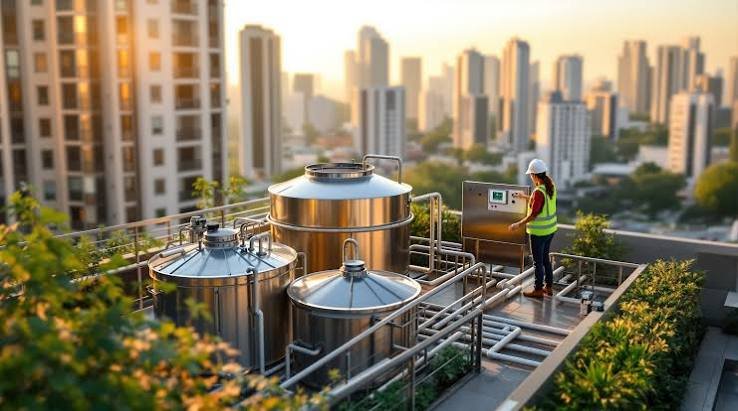
Sewage Treatment Plant (STP) is a wastewater treatment system designed to treat domestic sewage and remove solids, organic matter, pollutants, and harmful microorganisms. The treated water can then be safely discharged or reused for non-potable applications.
An STP uses a combination of physical, biological, and disinfection processes to improve wastewater quality. The treatment typically includes screening, primary treatment, biological treatment, clarification, filtration, and disinfection. Advanced technologies such as MBBR, SBR, and MBR can be selected based on wastewater characteristics, capacity, space availability, and reuse requirements.
STP systems help reduce water pollution, protect public health, conserve freshwater, support regulatory compliance, and promote sustainable water management. Treated water can be reused for gardening, toilet flushing, landscaping, cooling, and other suitable non-potable applications.
- What is an STP?
- Why is STP Important?
- How Does an STP Work?
- STP Treatment Process
- STP Technologies
- Benefits and Applications of STP
- FAQs About STP Systems
Quick Fact
Modern STP systems can treat and recycle wastewater efficiently, helping reduce freshwater consumption, minimize pollution, and support sustainable water management.
1. What is an STP?
Sewage Treatment Plant (STP) is a wastewater treatment system designed to treat domestic sewage generated from residential, commercial, institutional, and other facilities. It removes suspended solids, organic matter, pollutants, and harmful microorganisms from wastewater before it is discharged or reused.
An STP generally uses a combination of physical, biological, and chemical treatment processes. The wastewater passes through stages such as screening, primary treatment, biological treatment, clarification, filtration, and disinfection to achieve the required water quality.
Modern STP technologies such as MBBR, SBR, MBR, and Activated Sludge Process provide efficient and reliable wastewater treatment. The treated water can be reused for gardening, toilet flushing, landscaping, cooling, and other non-potable applications, helping conserve freshwater.
A well-designed STP also helps reduce water pollution, protect public health, support environmental compliance, lower freshwater consumption, and promote sustainable wastewater management. Regular operation and maintenance ensure consistent treatment performance and long-term system reliability.
2. Why is STP Important?
A Sewage Treatment Plant (STP) is important for treating domestic wastewater before it is discharged into the environment or reused. It helps remove harmful pollutants and microorganisms, protecting water resources and public health.
STP systems play an important role in preventing water pollution by reducing organic matter, suspended solids, and other contaminants from sewage. Proper wastewater treatment helps protect rivers, lakes, groundwater, and surrounding ecosystems from contamination.
Another major benefit is water conservation and reuse. Treated wastewater can be reused for gardening, toilet flushing, landscaping, cooling, and other non-potable applications, reducing dependence on freshwater.
STPs also help organizations and facilities maintain environmental and regulatory compliance while supporting sustainable wastewater management and reducing the overall environmental impact of sewage disposal.
3. How Does an STP Work?
A Sewage Treatment Plant (STP) works through a series of physical, biological, and disinfection processes to convert sewage into treated water suitable for safe discharge or reuse.
1. Collection: Wastewater from toilets, bathrooms, kitchens, and other sources is collected and transferred to the STP.
2. Screening: Screens remove large solids such as plastics, cloth, paper, and other debris from the incoming sewage.
3. Primary Treatment: Suspended solids and heavier particles are separated through settling, reducing the solid load entering the biological stage.
4. Biological Treatment: Microorganisms break down dissolved and organic pollutants in the wastewater, significantly reducing the organic load.
5. Clarification: The biological solids are separated from the treated water through settling, producing clearer water.
6. Filtration & Disinfection: Further filtration removes fine particles, followed by disinfection to reduce harmful microorganisms.
7. Treated Water Reuse: The final treated water can be reused for gardening, toilet flushing, landscaping, cooling, and other suitable non-potable applications.
4. STP Treatment Process
The STP treatment process involves multiple stages that progressively remove solids, organic matter, pollutants, and harmful microorganisms from sewage. Each stage is designed to improve water quality and prepare the treated water for safe discharge or reuse.
1. Sewage Collection
Wastewater from residential, commercial, institutional, or other facilities is collected and directed to the STP through a drainage network.
2. Screening
Large solid materials such as plastics, paper, cloth, and debris are removed using screens to protect pumps and downstream equipment.
3. Primary Treatment
Heavy suspended solids settle at the bottom of a settling tank, while lighter materials are separated from the wastewater.
4. Biological Treatment
Microorganisms break down organic matter and dissolved pollutants present in the wastewater. Technologies such as MBBR, SBR, and activated sludge processes may be used at this stage.
5. Secondary Clarification
The biological solids are separated from the treated water through sedimentation. A portion of the settled biomass may be returned to the biological treatment stage.
6. Filtration
The clarified water passes through suitable filtration systems to remove remaining fine suspended particles and improve water quality.
7. Disinfection
Disinfection using methods such as UV or chlorination helps reduce harmful microorganisms and makes the treated water suitable for its intended reuse or discharge.
8. Treated Water Reuse
Depending on the required quality, treated water can be reused for gardening, toilet flushing, landscaping, cooling, and other non-potable applications.
5. STP Technologies
Modern Sewage Treatment Plants (STPs) use different biological and membrane-based technologies depending on wastewater characteristics, treatment capacity, available space, treated-water quality requirements, and reuse objectives.
1. MBBR – Moving Bed Biofilm Reactor
MBBR uses specially designed media that support microorganisms for biological treatment. It offers efficient treatment, compact design, and operational flexibility.
2. SBR – Sequential Batch Reactor
SBR performs biological treatment, settling, and decanting in a single tank through sequential cycles. It is suitable where space is limited and consistent treatment performance is required.
3. MBR – Membrane Bioreactor
MBR combines biological treatment with membrane filtration, producing high-quality treated water with low suspended solids. It is well suited for applications requiring water reuse.
4. Activated Sludge Process (ASP)
ASP uses microorganisms and aeration to break down organic pollutants in sewage. It is a widely used and proven biological treatment method for municipal and domestic wastewater.
5. Moving Bed Biofilm Reactor (MBBR) + Tertiary Treatment
For higher-quality reuse requirements, MBBR can be combined with filtration and disinfection to further improve treated-water quality.
6. Benefits and Applications of STP
A Sewage Treatment Plant (STP) provides an effective solution for treating domestic wastewater while supporting water conservation, environmental protection, and sustainable wastewater management.
Benefits of STP
- Water Reuse: Treated water can be reused for gardening, flushing, landscaping, and other non-potable applications.
- Pollution Control: Reduces pollutants and harmful contaminants before wastewater reaches natural water bodies.
- Public Health Protection: Helps reduce harmful microorganisms and the risk of waterborne contamination.
- Freshwater Conservation: Reduces dependence on fresh water by enabling treated wastewater reuse.
- Regulatory Compliance: Helps facilities meet applicable wastewater discharge and environmental requirements.
- Cost Savings: Reusing treated water can reduce freshwater consumption and associated costs.
- Sustainable Solution: Supports responsible water management and reduces environmental impact.
Applications of STP
STPs are widely used in:
- Residential Buildings & Housing Societies
- Hotels & Resorts
- Hospitals & Healthcare Facilities
- Schools & Educational Institutions
- Commercial Buildings & Offices
- Shopping Malls & Complexes
- Industrial & Institutional Facilities
- Townships & Large Residential Projects
7. FAQs About STP Systems
1. What is an STP?
STP (Sewage Treatment Plant) is a system designed to treat domestic sewage by removing solids, organic matter, pollutants, and harmful microorganisms before discharge or reuse.
2. How does an STP work?
An STP typically uses screening, primary treatment, biological treatment, clarification, filtration, and disinfection to treat wastewater.
3. What are the common STP technologies?
Common technologies include MBBR, SBR, MBR, and Activated Sludge Process (ASP).
4. Can treated STP water be reused?
Yes. Depending on the treated-water quality, it can be reused for gardening, toilet flushing, landscaping, cooling, and other non-potable applications.
5. Where are STPs commonly used?
STPs are used in residential societies, hotels, hospitals, schools, commercial buildings, townships, and institutional facilities.
6. What are the main benefits of an STP?
STPs help prevent water pollution, conserve freshwater, protect public health, support regulatory compliance, and enable wastewater reuse.
7. Does an STP require regular maintenance?
Yes. Regular inspection, cleaning, equipment servicing, sludge management, and performance monitoring are important for reliable operation.
8. How do I choose the right STP technology?
The selection depends on wastewater flow, sewage characteristics, available space, required treated-water quality, operating costs, and reuse requirements.
9. What happens to the sludge generated by an STP?
Sludge is collected and treated through processes such as thickening, dewatering, and safe disposal or further processing, depending on its characteristics and applicable regulations.
10. Can an STP be customized?
Yes. STPs can be designed or configured according to the capacity, site conditions, wastewater characteristics, treatment standards, and specific reuse requirements of a project.
Build a Better Future with Smarter Water Treatment Solutions
From STP, ETP, WTP, ZLD and water recycling solutions to operation and maintenance services, we provide reliable and sustainable solutions designed to improve water quality, maximize reuse, and reduce operational costs.