Advancements in Water Treatment
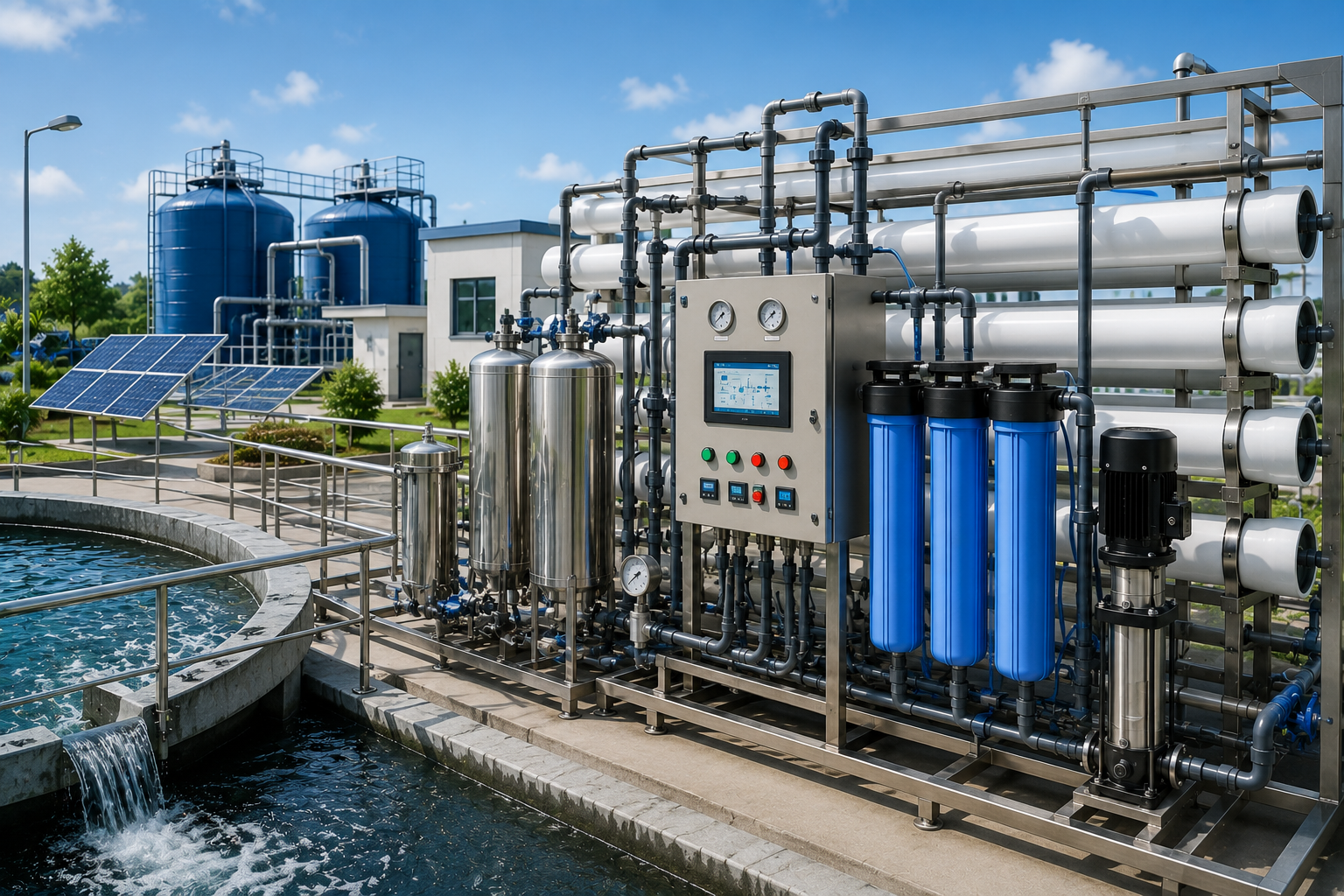
Water treatment technology is continuously evolving to provide more efficient, sustainable, and cost-effective solutions for managing water and wastewater. Modern treatment systems focus on improving water quality, increasing recovery, reducing energy consumption, and enabling greater water reuse.
Home / Blogs / Advancements in Water Treatment
Modern water treatment is evolving toward smarter, more efficient, sustainable, and water-recovery-focused solutions. Advanced technologies help improve treatment performance while reducing energy consumption, chemical usage, operational costs, and environmental impact.
Technologies such as Membrane Bioreactor (MBR), Ultrafiltration (UF), Reverse Osmosis (RO), Moving Bed Biofilm Reactor (MBBR), Sequential Batch Reactor (SBR), and Zero Liquid Discharge (ZLD) are increasingly used to achieve higher-quality treated water and maximize water recovery.
Automation and smart monitoring are also transforming treatment plants. Sensors, online monitoring, automated controls, and real-time data help operators track water quality and plant performance, identify issues quickly, and improve operational efficiency.
A major focus of modern water treatment is water reuse and recycling. Treated wastewater can be recovered for applications such as toilet flushing, gardening, cooling, landscaping, and industrial processes, helping reduce freshwater consumption.
The future of water treatment is moving toward digitalization, energy-efficient systems, resource recovery, water reuse, and sustainable wastewater management, helping industries and communities build more resilient water systems.
Regular membrane cleaning, pre-treatment maintenance, filter replacement, pressure monitoring, water-quality testing, and preventive servicing are important for maintaining RO performance and extending membrane life.
Modern RO systems can also be integrated with UF, MBR, ETP, STP, water recycling, and ZLD systems to create complete and sustainable water treatment solutions.
- What is an Advancement in Water Treatment?
- Why is Advanced Water Treatment Important?
- How Does Advanced Water Treatment Work?
- Advanced Water Treatment Processes
- Modern Water Treatment Technologies
- Benefits and Applications of Advanced Water Treatment
- FAQs About Advanced Water Treatment
Quick Fact
Modern water treatment technologies improve water recovery, reduce freshwater consumption, minimize environmental impact, and support sustainable water management.
1. What is an Advancement in Water Treatment?
Advancements in water treatment refer to the development and use of modern technologies, processes, and smart systems that make water and wastewater treatment more efficient, sustainable, cost-effective, and reliable.
These advancements include technologies such as MBR, RO, UF, MBBR, SBR, ZLD, automation, and real-time monitoring, which help improve water quality, increase water recovery, reduce energy and chemical consumption, and enable greater water reuse and recycling.
2. Why is Advanced Water Treatment Important?
Advanced water treatment is important for meeting the growing demand for clean water, efficient wastewater management, and sustainable water reuse. Traditional treatment methods may not always be sufficient to remove complex contaminants or achieve the water quality required for modern reuse applications. Advanced technologies provide better treatment performance and more reliable water quality.
Modern solutions such as Membrane Bioreactors (MBR), Reverse Osmosis (RO), Ultrafiltration (UF), MBBR, SBR, and Zero Liquid Discharge (ZLD) can improve contaminant removal, increase water recovery, and support the reuse of treated wastewater for suitable applications.
Advanced treatment also helps organizations reduce freshwater consumption, minimize wastewater discharge, lower environmental impact, and improve operational efficiency. With automation and real-time monitoring, treatment plants can be monitored more effectively, helping identify problems early and maintain consistent performance.
Overall, advanced water treatment supports water conservation, pollution prevention, regulatory compliance, cost efficiency, and sustainable water management, making it an important part of modern industrial and municipal water solutions.
3. How Does Advanced Water Treatment Work?
Advanced water treatment works through a combination of physical, biological, chemical, and membrane-based processes to remove contaminants and improve water quality. The treatment method is selected based on the source of water, wastewater characteristics, required quality, and intended reuse.
1. Pre-Treatment: Removes large solids, suspended particles, oil, and debris through screening, filtration, and other preliminary processes.
2. Biological Treatment: Microorganisms break down organic matter and pollutants. Technologies such as MBBR, SBR, and MBR may be used depending on the application.
3. Advanced Filtration: Technologies such as UF and membrane filtration remove fine particles, microorganisms, and other contaminants.
4. RO Treatment: Reverse Osmosis (RO) uses a semi-permeable membrane to reduce dissolved salts, TDS, and other dissolved contaminants, producing high-quality water.
5. Disinfection: UV, ozone, or chlorination can be used to reduce harmful microorganisms and improve water safety.
6. Water Recovery & Reuse: Treated water is recovered for suitable applications such as industrial processes, cooling, flushing, gardening, and other non-potable uses.
7. ZLD & Resource Recovery: Where required, Zero Liquid Discharge (ZLD) systems can further concentrate and recover water while minimizing liquid discharge.
4. Advanced Water Treatment Processes
Advanced water treatment uses multiple treatment stages to achieve high-quality water, maximum recovery, and effective contaminant removal. The exact process depends on the water source, contaminants, required quality, and intended use.
1. Pre-Treatment
Removes larger solids, suspended particles, oil, and debris using screening, grit removal, coagulation, and filtration.
2. Biological Treatment
Microorganisms break down organic matter and biodegradable pollutants. Technologies such as MBBR, SBR, and MBR are commonly used.
3. Membrane Filtration
Membrane technologies such as UF (Ultrafiltration) and MF (Microfiltration) remove fine suspended solids, bacteria, and other contaminants.
4. Reverse Osmosis (RO)
RO removes dissolved salts, TDS, and various dissolved contaminants to produce high-quality treated water suitable for specific reuse applications.
5. Advanced Disinfection
UV, ozone, or chlorination can be used to reduce microorganisms and provide additional protection against biological contamination.
6. Water Reuse & Recovery
Treated water is recovered and reused for applications such as cooling, flushing, gardening, industrial processes, and landscaping, depending on the required quality.
7. Zero Liquid Discharge (ZLD)
Where required, ZLD systems further treat concentrated wastewater to maximize water recovery and minimize liquid discharge.
5. Modern Water Treatment Technologies
Modern water treatment technologies are designed to provide efficient treatment, higher water recovery, lower environmental impact, and reliable water quality. The right technology depends on the type of water, contaminants, capacity, space, and reuse requirements.
1. MBBR – Moving Bed Biofilm Reactor
Uses biofilm carriers and microorganisms to efficiently remove organic pollutants from wastewater. It offers a compact design and flexible operation.
2. SBR – Sequential Batch Reactor
Treats wastewater in batches through aeration, settling, and decanting in a single tank, making it suitable for applications with variable wastewater flow.
3. MBR – Membrane Bioreactor
Combines biological treatment with membrane filtration to produce high-quality treated water with very low suspended solids, making it suitable for water reuse.
4. UF – Ultrafiltration
Uses membrane technology to remove fine suspended particles, colloids, bacteria, and other contaminants, often as a pre-treatment for RO.
5. RO – Reverse Osmosis
Uses semi-permeable membranes to reduce TDS, dissolved salts, and many dissolved contaminants, producing high-quality water.
6. ZLD – Zero Liquid Discharge
Maximizes water recovery and minimizes liquid wastewater discharge through a combination of membrane and evaporation technologies.
7. Smart Automation & Monitoring
Sensors, online monitoring, PLC/SCADA systems, and automated controls help monitor flow, pressure, pH, TDS, turbidity, and other operating parameters, improving plant efficiency and reliability.
8. Advanced Disinfection
Technologies such as UV, ozone, and chlorination help control microorganisms and improve the safety of treated water.
6. Benefits and Applications of Advanced Water Treatment
Advanced water treatment provides efficient, reliable, and sustainable solutions for improving water quality and managing wastewater. Modern technologies help organizations recover more water, reduce pollution, and optimize treatment operations.
Benefits of Advanced Water Treatment
- Higher Water Recovery: Maximizes the recovery of usable water from wastewater.
- Water Reuse: Enables treated water to be reused for suitable industrial and non-potable applications.
- Improved Water Quality: Effectively removes suspended solids, dissolved contaminants, organic matter, and microorganisms.
- Reduced Freshwater Consumption: Reduces dependence on freshwater sources through recycling and reuse.
- Lower Environmental Impact: Minimizes wastewater discharge and helps protect natural water resources.
- Energy & Cost Efficiency: Modern systems can optimize energy and chemical consumption and reduce operating costs.
- Regulatory Compliance: Helps meet applicable water quality and wastewater discharge requirements.
- Sustainable Water Management: Supports long-term water conservation and resource recovery.
Applications
Advanced water treatment is widely used in:
- Manufacturing Industries
- Pharmaceutical Industries
- Food & Beverage Industries
- Textile Industries
- Chemical Industries
- Automotive Industries
- Hospitals & Healthcare Facilities
- Hotels & Hospitality
- Residential & Commercial Buildings
- Industrial Water Recycling & Reuse Projects
7. FAQs About Advanced Water Treatment
1. What is Advanced Water Treatment?
Advanced water treatment uses modern technologies and processes to remove difficult contaminants, improve water quality, increase water recovery, and enable safe water reuse.
2. What technologies are used in Advanced Water Treatment?
Common technologies include MBBR, SBR, MBR, UF, RO, ZLD, UV, ozone, and advanced filtration systems.
3. Why is Advanced Water Treatment important?
It helps conserve freshwater, reduce pollution, improve water quality, maximize water recovery, and support sustainable water management.
4. Can treated wastewater be reused?
Yes. Depending on the required quality, treated water can be reused for cooling, gardening, flushing, landscaping, industrial processes, and other non-potable applications.
5. What is the role of RO in water treatment?
Reverse Osmosis (RO) uses semi-permeable membranes to remove dissolved salts, TDS, and various dissolved contaminants, producing high-quality water.
6. What is ZLD?
Zero Liquid Discharge (ZLD) is a water treatment approach designed to maximize water recovery and minimize or eliminate liquid wastewater discharge.
7. Is advanced water treatment suitable for industries?
Yes. It is widely used in pharmaceutical, textile, food & beverage, chemical, automotive, manufacturing, and other industries.
8. Does advanced water treatment reduce operating costs?
Modern systems can help reduce freshwater consumption, chemical usage, wastewater disposal costs, and energy consumption, depending on the system design and operating conditions.
9. How do I choose the right treatment technology?
Technology selection depends on water quality, flow rate, contaminants, required treated-water quality, available space, budget, and reuse objectives.
10. Does an advanced water treatment system require maintenance?
Yes. Regular monitoring, membrane cleaning, equipment inspection, filter replacement, calibration, and preventive maintenance are important for reliable long-term performance.
Advancing Water Treatment with Smarter & Sustainable Solutions
Explore innovative water treatment technologies designed to improve efficiency, maximize water recovery, reduce operational costs, and support sustainable water management.