
Top Benefits of Rainwater Harvesting
Everything you need to know about Rainwater Harvesting—including collection methods, storage systems, groundwater recharge, filtration, key benefits, applications, and maintenance. Learn how rainwater harvesting helps conserve freshwater, reduce water dependency, recharge groundwater, manage rainwater runoff, and support sustainable water management.
Home / Blogs / Top Benefits of Rainwater Harvesting
Rainwater Harvesting is a sustainable water management system that collects and stores rainwater from rooftops, terraces, open areas, and other suitable surfaces for future use or groundwater recharge. It helps conserve water and reduce dependence on municipal or groundwater sources.
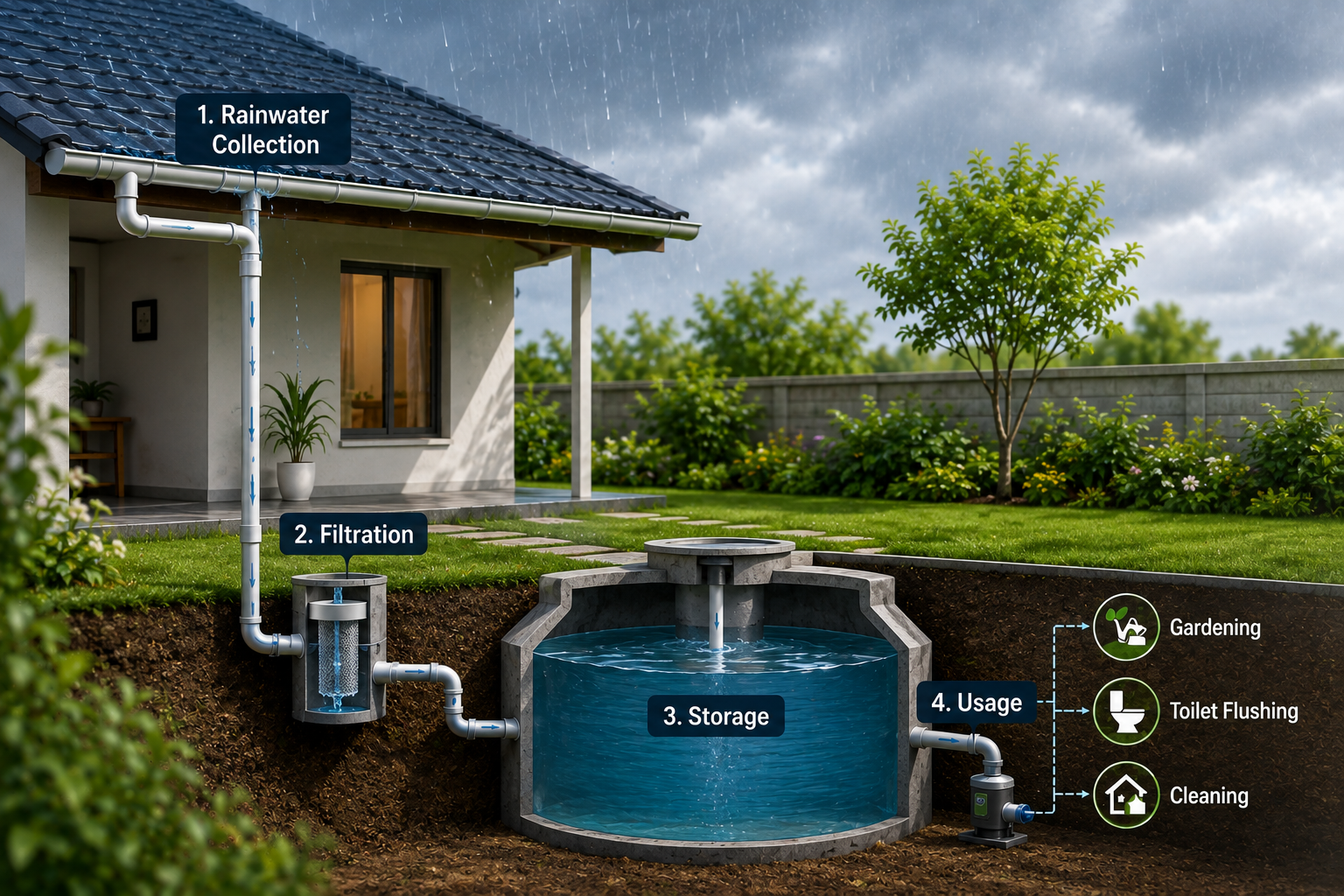
The collected rainwater passes through gutters, downpipes, filters, and storage tanks to remove debris and impurities before storage. Depending on the application, the harvested water can be used for gardening, landscaping, toilet flushing, cleaning, and other non-potable purposes.
Rainwater harvesting can also support groundwater recharge through recharge pits, recharge wells, trenches, or other suitable structures. This helps improve groundwater availability and manage excess rainwater runoff.
- What is Rainwater Harvesting?
- Why is Rainwater Harvesting Important?
- How Does Rainwater Harvesting Work?
- Rainwater Harvesting Process
- Rainwater Harvesting Systems & Technologies
- Benefits and Applications of Rainwater Harvesting
- FAQs About Rainwater Harvesting
Quick Fact
Rainwater harvesting systems help conserve freshwater, reduce water runoff, recharge groundwater, and support sustainable water management by collecting and reusing rainwater.
1. What is Rainwater Harvesting?
Rainwater Harvesting is the process of collecting, filtering, storing, and reusing rainwater from rooftops, terraces, open areas, and other suitable surfaces. It is a sustainable water management practice that helps conserve freshwater and reduce dependence on municipal and groundwater sources.
Collected rainwater can be stored in tanks or reservoirs for later use or directed into recharge pits, wells, and trenches to replenish groundwater. Depending on the treatment and intended use, harvested rainwater can be used for gardening, landscaping, toilet flushing, cleaning, and other non-potable applications.
Rainwater harvesting provides an effective way to conserve water, manage rainwater runoff, support groundwater recharge, reduce water costs, and promote sustainable water management.
2. Why is Rainwater Harvesting Important?
Rainwater harvesting is important because it helps conserve freshwater and reduce dependence on municipal water supplies and groundwater. Collecting and storing rainwater provides an additional source of water for suitable domestic, commercial, and industrial applications.
It also helps recharge groundwater by directing collected rainwater into recharge pits, wells, and trenches. This can support groundwater availability and improve long-term water security, particularly in areas experiencing water shortages.
Rainwater harvesting also helps manage stormwater runoff, reducing waterlogging, soil erosion, and uncontrolled discharge during heavy rainfall. By making better use of naturally available rainwater, it supports sustainable water management, water conservation, and environmental protection.
3. How Does Rainwater Harvesting Work?
Rainwater harvesting works by collecting rainwater, filtering it, storing it, and reusing it or directing it for groundwater recharge. The system captures rainwater from rooftops and other suitable surfaces and channels it through a planned collection network.
1. Rainwater Collection: Rainwater falling on rooftops, terraces, or other collection surfaces is directed toward gutters and downpipes.
2. Filtration: Collected water passes through screens and filters to remove leaves, dirt, debris, and other suspended impurities.
3. First-Flush Diversion: The initial flow of rainfall can be diverted to remove accumulated dust and contaminants from the collection surface.
4. Storage: Filtered rainwater is collected in storage tanks, reservoirs, or underground storage systems for future use.
5. Groundwater Recharge: Alternatively, rainwater can be directed into recharge pits, trenches, recharge wells, or borewell recharge systems to replenish groundwater.
6. Reuse: Stored rainwater can be used for suitable applications such as gardening, landscaping, toilet flushing, cleaning, and other non-potable purposes, depending on water quality and local requirements.
4. Rainwater Harvesting Process
The Rainwater Harvesting Process involves collecting, filtering, storing, and reusing rainwater or directing it for groundwater recharge. A properly designed system helps maximize water collection while reducing impurities and uncontrolled runoff.
1. Rainwater Collection
Rainwater is collected from rooftops, terraces, paved areas, and other suitable surfaces and directed through gutters and downpipes.
2. First-Flush Diversion
The initial rainwater flow is diverted to remove dust, leaves, bird droppings, and other contaminants accumulated on the collection surface.
3. Filtration
The collected water passes through suitable mesh screens, sand filters, gravel filters, or other filtration systems to reduce suspended impurities.
4. Storage
Filtered rainwater is stored in storage tanks, underground reservoirs, or other suitable containers for later use.
5. Groundwater Recharge
Instead of storage, collected rainwater can be directed to recharge pits, trenches, recharge wells, or other recharge structures to support groundwater replenishment.
6. Water Reuse
Stored rainwater can be used for suitable non-potable applications such as gardening, landscaping, toilet flushing, cleaning, and other appropriate uses.
7. Regular Maintenance
Gutters, filters, screens, storage tanks, and recharge structures should be cleaned and inspected regularly to maintain system efficiency and water quality.
5. Rainwater Harvesting Systems & Technologies
Modern Rainwater Harvesting Systems use different collection, filtration, storage, and groundwater recharge technologies to efficiently capture and utilize rainwater.
1. Rooftop Rainwater Harvesting
Collects rainwater from rooftops and terraces through gutters and downpipes and directs it toward storage tanks or recharge structures.
2. First-Flush System
Diverts the initial rainwater flow to remove dust, debris, and contaminants accumulated on the collection surface.
3. Rainwater Filtration Systems
Uses mesh screens, gravel filters, sand filters, and other filtration media to remove suspended particles before storage or recharge.
4. Rainwater Storage Tanks
Filtered rainwater is stored in above-ground or underground tanks for future non-potable use.
5. Recharge Pits
Collected rainwater is directed into recharge pits filled with suitable filter media to help replenish groundwater.
6. Recharge Wells
Recharge wells allow collected rainwater to move into suitable underground formations, supporting groundwater replenishment where site conditions permit.
7. Recharge Trenches
Long, narrow recharge structures collect and allow rainwater to infiltrate into the ground, making them useful for larger open areas and stormwater management.
8. Smart Rainwater Harvesting Systems
Modern systems can use water-level sensors, automated controls, filtration monitoring, and smart monitoring to improve system management and optimize water collection and storage.
6. Benefits and Applications of Rainwater Harvesting
Rainwater harvesting provides a sustainable and cost-effective approach to water conservation by collecting and utilizing naturally available rainwater. It helps reduce dependence on freshwater sources while supporting groundwater recharge and better water management.
Benefits of Rainwater Harvesting
- Water Conservation: Reduces dependence on municipal and groundwater sources.
- Groundwater Recharge: Helps replenish groundwater through recharge pits, wells, and trenches.
- Reduced Water Costs: Provides an additional source of water for suitable applications.
- Stormwater Management: Helps control rainwater runoff and reduce waterlogging.
- Environmental Protection: Supports sustainable use of natural water resources.
- Water Security: Provides an additional water source during periods of water shortage.
- Low Operating Cost: Once installed, properly maintained systems can operate with relatively low ongoing costs.
- Sustainable Solution: Promotes responsible water management and resource conservation.
Applications of Rainwater Harvesting
Rainwater harvesting systems can be used in:
- Residential Buildings & Housing Societies
- Commercial Buildings & Offices
- Schools & Educational Institutions
- Hotels & Resorts
- Hospitals & Healthcare Facilities
- Industrial Facilities
- Agricultural & Farming Areas
- Institutional Campuses
- Townships & Large Developments
7. FAQs About Rainwater Harvesting
1. What is Rainwater Harvesting?
Rainwater harvesting is the process of collecting, filtering, storing, and reusing rainwater from rooftops, terraces, and other suitable surfaces.
2. Why is Rainwater Harvesting Important?
It helps conserve freshwater, reduce water dependency, manage rainwater runoff, recharge groundwater, and support sustainable water management.
3. How Does a Rainwater Harvesting System Work?
Rainwater is collected through gutters and downpipes, passed through filtration and first-flush systems, and then either stored for reuse or directed to groundwater recharge structures.
4. Can harvested rainwater be used directly?
The suitability depends on the intended use and water quality. For non-potable applications such as gardening, flushing, and cleaning, appropriate filtration is generally used. Drinking applications require additional treatment to meet applicable water-quality standards.
5. What are the main components of a rainwater harvesting system?
Typical components include collection surfaces, gutters, downpipes, first-flush devices, filters, storage tanks, pumps, and groundwater recharge structures.
6. What are the benefits of Rainwater Harvesting?
It helps save freshwater, reduce water costs, recharge groundwater, control stormwater runoff, and improve water security.
7. Where can Rainwater Harvesting be used?
It can be installed in homes, housing societies, commercial buildings, schools, hospitals, hotels, industries, agricultural areas, and institutional campuses.
8. What is groundwater recharge?
Groundwater recharge is the process of directing collected rainwater into the ground through recharge pits, trenches, or recharge wells to replenish underground water resources.
9. Does Rainwater Harvesting require maintenance?
Yes. Gutters, filters, first-flush systems, storage tanks, and recharge structures should be inspected and cleaned regularly to maintain system efficiency.
10. Can Rainwater Harvesting reduce water bills?
Yes. Using harvested rainwater for suitable non-potable applications can reduce dependence on purchased or municipal water, potentially lowering water costs.
Build a Better Future with Smart Rainwater Harvesting Solutions
Discover smart and sustainable rainwater harvesting solutions designed to conserve freshwater, recharge groundwater, reduce water dependency, manage rainwater runoff, and support long-term water sustainability.