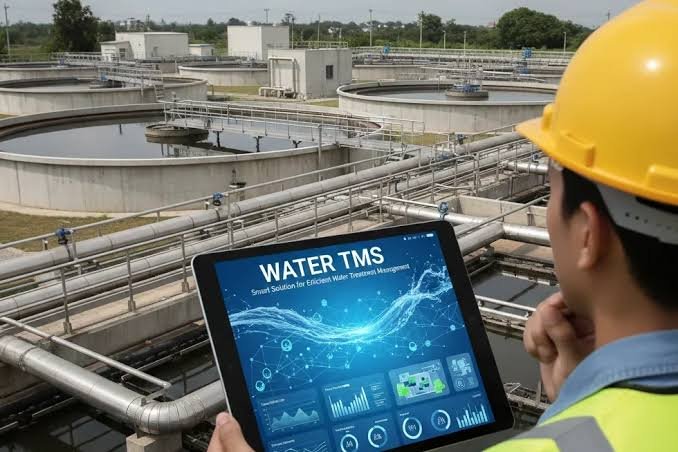
Water TMS: Smart Solution for Efficient Water Treatment Management
Water TMS provides smart and efficient water treatment solutions designed to improve water quality, system performance, water recovery, and operational efficiency. With advanced treatment technologies, monitoring, automation, and reliable maintenance support, Water TMS helps industries manage water and wastewater systems effectively while reducing downtime, operational costs, and environmental impact.
Home / Blogs / Water TMS: Smart Solution for Efficient Water Treatment Management
Water TMS: Smart Solution for Efficient Water Treatment Management provides advanced and reliable solutions for managing industrial, commercial, and wastewater treatment systems. By combining modern treatment technologies with smart monitoring, automation, preventive maintenance, and performance optimization, Water TMS helps maintain consistent water quality and improve overall plant efficiency.
Smart water treatment management enables better monitoring of important parameters such as flow, pH, TDS, conductivity, pressure, turbidity, and system performance. Real-time monitoring and automated controls can help identify operational issues early, reduce unexpected breakdowns, optimize chemical and energy usage, and improve the reliability of treatment equipment.
Water TMS solutions can support a wide range of systems, including WTP, STP, ETP, RO, DM plants, water softeners, UF systems, ZLD, and water recycling solutions. These systems can be designed according to specific water quality requirements, treatment capacity, industrial applications, and water reuse objectives.
By focusing on water conservation, recycling, recovery, efficient operation, and sustainable treatment practices, Water TMS helps organizations reduce freshwater dependency and environmental impact. With proper design, monitoring, and regular maintenance, smart water treatment management supports long-term plant performance, cost efficiency, reliable water quality, and sustainable water resource management.
- What is Water TMS?
- Why is Water TMS Important?
- How Does Water TMS Work?
- Water Treatment Management Process
- Water TMS Technologies & Smart Solutions
- Benefits and Applications of Water TMS
- FAQs About Water TMS
Quick Fact
Water TMS helps industries manage water treatment systems efficiently by improving water quality, optimizing plant performance, enabling smart monitoring and automation, reducing downtime and operating costs, and supporting reliable and sustainable water management.
1. What is Water TMS?
Water TMS is a smart water treatment management approach designed to help industries and organizations monitor, control, maintain, and optimize their water and wastewater treatment systems. It combines treatment technologies, automation, monitoring, preventive maintenance, and performance management to improve the overall efficiency and reliability of water treatment operations.
A Water TMS solution can support systems such as WTP, STP, ETP, RO, UF, DM plants, water softeners, ZLD systems, and water recycling plants. Depending on the application, the system can monitor important operating parameters such as pH, TDS, conductivity, turbidity, flow, pressure, tank levels, chemical dosing, and equipment performance.
The main objective of Water TMS is to provide better control over water treatment operations. By using real-time information and systematic maintenance practices, operators can identify potential problems earlier, optimize treatment processes, reduce unnecessary resource consumption, and maintain consistent treated-water quality.
2. Why is Water TMS Important?
Water treatment plants involve multiple processes and equipment that need to work together continuously. Poor monitoring, delayed maintenance, incorrect chemical dosing, equipment failure, or changes in raw-water quality can affect treatment performance and increase operating costs.
Water TMS helps provide better visibility and control over plant operations. Continuous monitoring can help operators identify abnormal changes in parameters such as pressure, flow, conductivity, pH, or turbidity and take corrective action before a small issue develops into a major operational problem.
Smart management also supports preventive maintenance. Equipment performance can be tracked over time, allowing maintenance activities to be planned according to operating conditions rather than waiting for equipment failure.
Another important benefit is resource optimization. Monitoring water consumption, chemical usage, energy consumption, recovery rates, and wastewater generation can help organizations identify opportunities to improve efficiency and reduce operational costs.
3. How Does Water TMS Work?
Water TMS works by combining water treatment equipment, sensors, automation, data monitoring, maintenance practices, and performance analysis into a structured management system.
First, sensors and instruments collect information from different points in the treatment plant. Parameters such as pH, conductivity, TDS, turbidity, flow, pressure, temperature, tank level, and equipment status can be monitored depending on the system.
The collected information can then be transferred to a PLC, HMI, SCADA system, or other monitoring platform. Operators can view plant conditions, equipment status, alarms, and important water-quality parameters from a centralized interface.
If a parameter moves outside the defined operating range, the system can generate an alarm or notification, allowing operators to investigate the issue. Automated controls can also manage selected processes such as pumps, valves, dosing systems, filtration cycles, and other equipment where appropriate.
4. Water Treatment Management Process
An effective Water TMS process generally includes several stages that work together to maintain reliable plant performance.
1. Water Quality Assessment
The process begins by understanding the raw-water and treated-water characteristics. Parameters such as pH, TDS, hardness, turbidity, conductivity, organic load, and other application-specific parameters can be analyzed.
2. Treatment System Monitoring
Sensors and instruments monitor important parameters throughout the plant. This provides information about how individual treatment stages are performing.
3. Equipment Monitoring
Critical equipment such as pumps, motors, blowers, dosing systems, filters, membranes, valves, and control systems can be monitored for operating status and abnormal conditions.
4. Automated Control
Automation systems can control selected plant functions such as pump operation, valve operation, chemical dosing, filtration cycles, tank filling, and regeneration cycles, depending on plant design.
5. Alarm & Fault Detection
When monitored parameters exceed defined operating limits, alarms can notify operators about conditions such as high pressure, low flow, abnormal conductivity, high tank level, equipment failure, or other process deviations.
6. Preventive Maintenance
Operating data and maintenance schedules can be used to plan inspection, cleaning, servicing, calibration, membrane cleaning, filter replacement, pump maintenance, and other preventive activities.
7. Performance Analysis
Plant data can be reviewed to identify trends in water consumption, recovery, energy usage, chemical consumption, equipment performance, downtime, and treated-water quality.
8. Optimization
Based on monitoring and performance data, treatment processes can be adjusted to improve efficiency, reliability, water recovery, and resource utilization.
5. Water TMS Technologies & Smart Solutions
Modern Water TMS solutions can incorporate several technologies depending on the requirements of the treatment plant.
PLC-Based Automation
Programmable Logic Controllers (PLC) can automate treatment processes and control pumps, valves, dosing systems, filtration cycles, and other equipment.
SCADA Monitoring
SCADA systems provide centralized monitoring and control of treatment plants. Operators can view process parameters, equipment status, alarms, trends, and historical information.
Online Sensors
Online sensors can continuously monitor parameters such as:
- pH
- TDS
- Conductivity
- Turbidity
- Flow
- Pressure
- Temperature
- Tank level
- Dissolved oxygen, where applicable
Smart Water Meters
Water meters can help track raw-water consumption, treated-water production, reuse volumes, and wastewater generation, supporting better water accounting.
Automated Chemical Dosing
Automated dosing systems can adjust chemical addition according to defined operating parameters, helping improve treatment consistency and reduce unnecessary chemical consumption.
Remote Monitoring
Where supported by the plant infrastructure, remote monitoring can allow authorized personnel to view plant status, alarms, performance trends, and operational information without being physically present at the plant.
Predictive & Condition-Based Maintenance
Equipment data such as pressure, vibration, temperature, operating hours, and performance trends can help identify signs of equipment deterioration and support condition-based maintenance.
Data Logging & Analytics
Historical data can be used to analyze water quality, plant efficiency, equipment performance, downtime, chemical usage, and recovery rates and identify opportunities for improvement.
Integration with Water Treatment Technologies
Water TMS can be implemented alongside treatment technologies such as:
- WTP – Water Treatment Plant
- STP – Sewage Treatment Plant
- ETP – Effluent Treatment Plant
- RO – Reverse Osmosis
- UF – Ultrafiltration
- DM – Demineralization
- Water Softener Plants
- ZLD – Zero Liquid Discharge
- Water Recycling Systems
6. Benefits and Applications of Water TMS
Benefits of Water TMS
Improved Water Quality Monitoring
Continuous monitoring helps operators track important water-quality parameters and identify changes more quickly.
Better Plant Efficiency
Monitoring treatment performance helps identify inefficient processes and opportunities to optimize water, energy, chemical, and equipment usage.
Reduced Downtime
Early detection of abnormal conditions can help operators respond before equipment problems result in major plant interruptions.
Preventive Maintenance
Maintenance can be planned based on operating hours, equipment condition, performance trends, and scheduled requirements, helping reduce unexpected failures.
Reduced Operating Costs
Better monitoring and process optimization can help control chemical consumption, energy usage, water losses, emergency repair costs, and unnecessary maintenance.
Improved Equipment Life
Regular monitoring and timely maintenance can help protect pumps, motors, membranes, filters, valves, blowers, and other treatment equipment.
Better Water Recovery
Water consumption and recovery can be monitored to identify opportunities for recycling and reuse, reducing dependence on freshwater.
Centralized Management
Multiple treatment processes and equipment can be monitored through a centralized automation or SCADA interface, improving operational visibility.
Sustainable Water Management
Water TMS supports more efficient use of water resources through monitoring, treatment optimization, recycling, recovery, and preventive maintenance.
Applications of Water TMS
Water TMS can be applied across a wide range of industries and facilities, including:
- Manufacturing Industries
- Pharmaceutical Industries
- Chemical Industries
- Textile Industries
- Food & Beverage Industries
- Automobile Industries
- Power Plants
- Hospitals
- Hotels
- Commercial Buildings
- Residential Complexes
- Industrial Water Treatment Plants
- Wastewater Treatment Facilities
7. FAQs About Water TMS
1. What is Water TMS?
Water TMS is a smart water treatment management system or approach that combines monitoring, automation, maintenance, data analysis, and treatment technologies to improve water and wastewater plant performance.
2. What does Water TMS monitor?
Depending on the plant configuration, Water TMS can monitor pH, TDS, conductivity, turbidity, flow, pressure, temperature, tank levels, chemical dosing, equipment status, and other application-specific parameters.
3. Can Water TMS be used for RO Plants?
Yes. Water TMS can be integrated with RO plants to monitor parameters such as feed pressure, flow, permeate quality, conductivity, recovery, pump status, and other operating conditions.
4. Can Water TMS manage STP and ETP systems?
Yes. Water TMS can support STP and ETP monitoring and management, including process parameters, equipment status, alarms, water quality, sludge-related operations, and maintenance activities.
5. Does Water TMS support preventive maintenance?
Yes. Operating data, equipment runtime, alarms, and performance trends can be used to support planned and condition-based maintenance.
6. Can Water TMS reduce water consumption?
It can help organizations identify water consumption, losses, recovery, and reuse opportunities. The actual savings depend on the plant design, operating practices, and optimization measures implemented.
7. Can Water TMS reduce chemical consumption?
Smart monitoring and automated dosing can help optimize chemical usage where the treatment process supports automated control. Actual chemical savings depend on water quality, treatment requirements, process settings, and operating conditions.
8. Can Water TMS provide remote monitoring?
Yes, remote monitoring can be implemented where appropriate communication, network infrastructure, cybersecurity controls, and authorized access are available.
9. What technologies can be integrated with Water TMS?
Water TMS can work with PLC, SCADA, HMI, sensors, online analyzers, flow meters, pressure sensors, automated valves, dosing systems, smart meters, and data-logging platforms.
10. Can Water TMS be customized?
Yes. A Water TMS solution can be configured according to the plant capacity, treatment technology, monitoring requirements, automation level, water-quality parameters, operational objectives, and available infrastructure.
Build a Better Future with Smarter Water Treatment Management
Discover Water TMS: Smart Solutions for Efficient Water Treatment Management, designed to improve water quality, optimize treatment plant performance, enable smart monitoring and automation, reduce downtime and operating costs, and support sustainable water management. With advanced technologies and reliable maintenance solutions, Water TMS helps industries achieve efficient water treatment, better resource utilization, consistent system performance, and long-term operational reliability.